Stand beside a stretch of overgrown lineside in late October and you’ll spot the problem before anyone explains it. Wet leaf litter smeared across the railhead. Branches creeping toward the signal sighting line. A self-seeded sycamore leaning quietly over the overhead line equipment. None of it looks dramatic. All of it costs the railway in delays, risk, and emergency call-outs every single autumn.
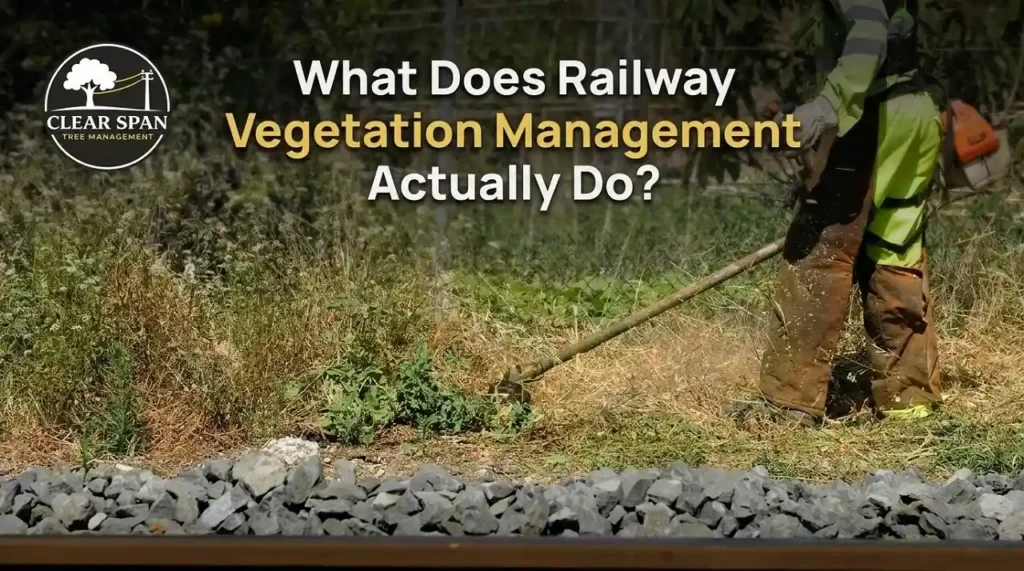
Rail Vegetation Management Services exist to stop that slow drift into danger. In plain terms, this is the planned control of trees, scrub, and plants growing within and alongside the rail corridor, carried out to protect safety, performance, and the surrounding infrastructure. This guide walks through what the work genuinely involves, why each part earns its place, and what it costs the network when it’s left undone.
What Are Rail Vegetation Management Services?
Rail vegetation management services are the planned clearance, control, and ongoing maintenance of trees and plants growing in the railway corridor. The work holds a safe clearance zone around the track, protects signals and overhead lines, keeps drainage flowing, and reduces fire and leaf-fall risk, all while meeting biodiversity obligations on the lineside estate.
The job splits into four core functions:
- Safety clearance around the running line and equipment.
- Sighting maintenance for signals and level crossings.
- Drainage protection by keeping channels and ditches root-free.
- Vegetation control of invasive and fast-growing species.
Network Rail and freight operators set the standards. Specialist contractors deliver the work safely within a live operational environment, which is why this sits alongside other vegetation management near live infrastructure rather than ordinary tree surgery.
What Types of Plants Need to Be Cleared from Railway Lines?
The plants cleared from railway lines range from fast-growing self-seeded trees to invasive weeds and dense scrub. The priority targets are species that block sightlines, drop heavy leaf-fall, undermine track and drainage, or threaten overhead line equipment. Good trackside vegetation control tackles the highest-risk growth first rather than clearing indiscriminately.
High-Priority Vegetation
- Sycamore, ash, and willow self-seeders close to the track.
- Leylandii and dense conifer screens blocking sightlines.
- Bramble and blackthorn scrub encroaching on the cess.
- Japanese knotweed and other invasive species carrying legal control duties.
- Ivy strangling and weakening lineside trees.
Vegetation Worth Keeping
Not everything gets cut. Slow-growing natives like hawthorn, holly, blackthorn, and elder are often retained or deliberately planted. They suit the railway environment, grow slowly, and support biodiversity without ever threatening the line.
How Can Overgrown Vegetation Affect Train Operations?
Overgrown vegetation affects train operations by hiding signals, cutting driver visibility, dropping leaves that cause low railhead adhesion, and physically fouling the track or overhead lines. Each of these forces speed restrictions, delays, or closures, which is why rail corridor maintenance is treated as a performance issue, not a cosmetic one.
The Autumn Leaf-Fall Problem
The biggest operational headache arrives every autumn. Crushed wet leaves bond into a slick, Teflon-like film on the railhead. Adhesion drops, trains take longer to brake and accelerate, and you get the low adhesion conditions behind station overruns and signals passed at danger. Managing the leaf-dropping species along the lineside before autumn directly cuts this risk.
Direct Physical Interference
- Branches fouling the loading gauge or pantograph.
- Fallen trees blocking the line in storms.
- Vegetation obscuring signals and level-crossing sightlines.
How Does Vegetation Affect Railway Drainage Systems?
Vegetation damages railway drainage when roots invade and block trackside channels, ditches, and culverts, and when leaf litter silts them up. Blocked drainage causes track flooding, ballast washout, and embankment instability, making this one of the most overlooked reasons railway vegetation clearance matters at all.
Why Drainage Is So Critical
The railway depends on free-draining ballast and a working network of lineside ditches and culverts. When tree roots break into those channels, or fallen leaves silt them solid, water has nowhere to escape. The damage then escalates fast:
- Waterlogged ballast loses its load-bearing strength.
- Saturated embankments become prone to landslips.
- Standing water quietly accelerates track and structure decay.
Keeping drainage clear of roots and debris is core to any serious programme, and it’s a gap most general guides skip entirely.
Can Vegetation Management Prevent Railway Accidents?
Yes, vegetation management prevents railway accidents by keeping signals visible, reducing leaf-fall adhesion incidents, removing trees that could fall on the line, and protecting overhead line equipment from contact and fire. Proactive railway infrastructure protection clears hazards before they cause harm instead of reacting after the event.
The Main Accident Risks Reduced
- Trees falling onto the line in storms and high winds.
- Obscured signals leading to misread or missed aspects.
- Low adhesion from leaf-fall causing overruns.
- Vegetation fires near electrified lines in dry spells.
- Branches contacting live overhead equipment.
Because of these risks, Network Rail, as a statutory undertaker, is mandated to keep the line safe and does not need permission to fell trees on its own land where they pose a genuine operational threat.
What Happens If Vegetation Around Railway Tracks Is Ignored?
When vegetation around railway tracks is ignored, the problems compound season after season. Light scrub becomes mature trees fouling the line, blocked drainage brings flooding and landslips, signals disappear behind growth, and dangerous deadwood stacks up. Neglected vegetation around railway tracks turns cheap routine work into expensive emergencies.
The Cost of “Cut and Forget”
The railway learned this the hard way. Lines left under the old “cut and forget” habit let trees and branches grow tight to the running rail, eventually demanding large-scale clearance and major disruption. Ignored vegetation escalates with grim predictability:
- Light scrub becomes established trees within a few years.
- Small drainage blockages become flooding and embankment failures.
- Minor sighting issues become safety-critical obstructions.
- Routine cyclical work becomes costly emergency intervention.
Planned, cyclical rail corridor maintenance is always cheaper and safer than scrambling after a failure.
Why Is Railway Vegetation Management Necessary for Infrastructure Protection?
Railway vegetation management is necessary for infrastructure protection because uncontrolled growth threatens nearly every asset in the rail corridor, from the track and ballast to signals, overhead lines, embankments, and structures. Sustained railway vegetation services preserve these assets and stretch their working life.
Assets Protected by the Work
- Track and ballast from root intrusion and waterlogging.
- Signals and sighting lines from obstruction.
- Overhead line equipment from contact and fire.
- Embankments and cuttings from root-driven landslips.
- Bridges, culverts, and structures from root damage.
Balancing Safety with Biodiversity
Modern rail vegetation management services aren’t about stripping everything bare. The lineside is a vital green corridor, and Network Rail’s Biodiversity Action Plan commits to balancing operational safety with habitat. Techniques like crown reduction, pollarding, and coppicing keep ecological value while removing risk. Major works are also restricted during the bird nesting season under the Wildlife and Countryside Act 1981, except where safety-critical. That balance, safety first, wildlife protected, is exactly what a professional service is built to deliver.
What Railway Clients Most Often Ask
What Clearance Distance Is Required Around Railway Tracks?
A safety corridor is kept clear of trees and tall vegetation on each side of the track, with the exact width set by Network Rail standards and the conditions on that line. Electrified routes with overhead line equipment need extra clearance. Professional crews work to these defined corridors rather than cutting to an arbitrary line.
Who Is Responsible for Vegetation Near the Railway?
Network Rail manages vegetation on its own lineside estate and can remove trees that pose an operational risk without permission. Where a dangerous tree stands on neighbouring land, Network Rail works with the landowner to agree a plan. Lineside neighbours within 500 metres are often consulted before major vegetation clearance begins.
When Can Railway Vegetation Work Be Carried Out?
Work runs year-round, but major clearance is limited during the bird nesting season, roughly February to August, except where safety-critical. Autumn focuses on leaf-fall species ahead of the low adhesion season. Cyclical rail corridor maintenance follows these seasonal windows to balance operational need with biodiversity duties.
Does This Work Include Japanese Knotweed Control?
Yes. Controlling invasive species such as Japanese knotweed is a core part of professional trackside vegetation control. These plants spread aggressively along the corridor and carry legal control obligations. They need specialist treatment and containment rather than simple cutting, which only risks spreading them further.
Why Use a Specialist Contractor for Trackside Vegetation?
Working on an operational railway demands training, safety accreditation, and equipment that general tree surgeons don’t hold. Utility and infrastructure arborists are trained to work near live overhead line equipment and moving trains. That’s why this work goes to accredited specialists rather than standard ground crews.