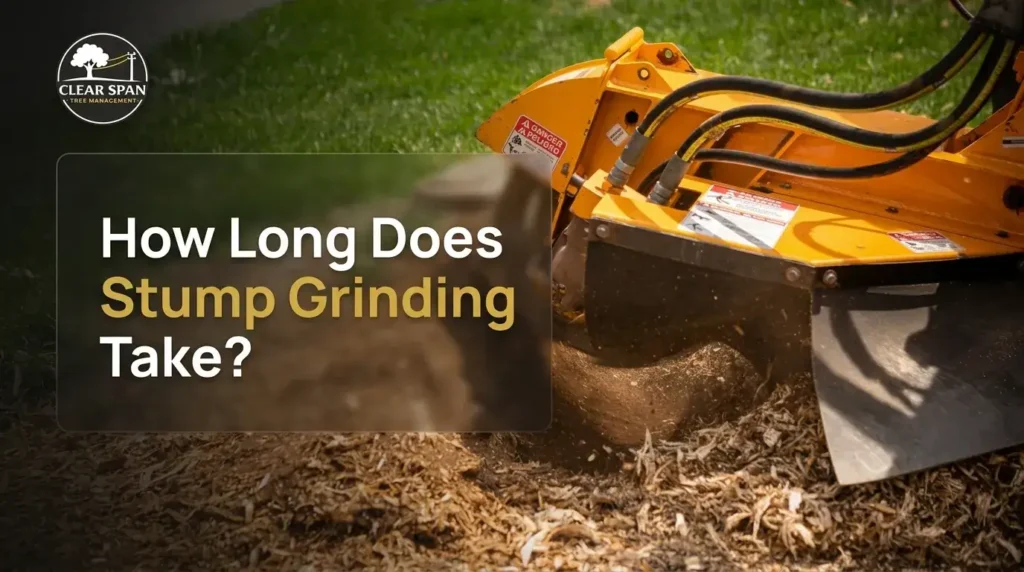
Most domestic stumps grind out in 15 minutes to 2 hours of cutting time. Smaller stumps under 30cm wide are often finished inside half an hour; larger hardwood stumps can stretch toward four hours. At Clearspan Tree Management, we give every homeowner across Poole, Bournemouth, and Christchurch the same honest line on timing: the blade time itself is fast, but the full site visit, including access checks, service location, and chip clear-up, usually runs longer than people expect. So how long does stump grinding take in practice? Here’s the realistic picture.
What Actually Determines How Long Stump Grinding Takes on a Domestic Job
Stump size is the headline factor, but it isn’t the whole story. A 25cm pine stump in an open lawn might take twenty minutes of grinding. The same diameter beech sitting beside a brick wall, with a fence on one side and an unmarked drain run nearby, will easily push past an hour because the operator has to work in shallow, careful passes and check the ground as they go. Wood density also changes the maths. Oak, beech, and hornbeam stress the carbide-tipped teeth far harder than softwoods like pine or leylandii.
The factor that surprises homeowners most is what’s hiding inside the wood. Old fencing wire grown into the bark, embedded flint stones, masonry rubble, or even a forgotten gatepost: each one can shred a fresh set of teeth in seconds. On rocky Dorset heath soil it’s more common than people realise, and a mid-job tooth change can add thirty minutes on its own. So how long does stump grinding take comes down to four things: size, species, what’s around the stump, and what’s buried inside it.
A Realistic Time Breakdown by Stump Size
This is roughly how long does it take to grind a stump of different diameters using a professional-grade tracked machine on reasonable ground:
| Stump diameter | Wood type | Realistic grinding time |
| Under 30cm | Pine, leylandii, fir | 15 to 30 minutes |
| 30cm to 60cm | Mixed softwood / hardwood | 30 minutes to 1 hour |
| 60cm to 90cm | Oak, beech, sycamore | 1 to 2 hours |
| Over 90cm | Mature hardwood | 2 to 4 hours or longer |
Add roughly twenty to forty minutes on top for site set-up, CAT scanning for buried services, lawn protection boards, and the final chip clear-up. Most single-stump domestic jobs in Dorset come and go inside a working morning. Multi-stump visits, four or five stumps in one garden, often fill a full day but average a shorter time per stump because the machine is already on site.
Ready To Book a Same-Visit Stump Grinding Service in Dorset?
If you’ve got one stubborn stump or several lined up in the garden, Clearspan Tree Management can visit, assess access, and provide a clear written quote without obligation. Most domestic jobs across Poole and Bournemouth wrap up in a single appointment with our tracked grinder used for residential tree stump removal, which fits through a standard 90cm gate and works to BS 3998.
Why Soil, Access, And Stump Age Stretch the Timeline
Ground conditions change cutting speed more than people expect. Soft, moist soil lets the cutting wheel sweep cleanly through the root flare. Compacted clay or stony heathland soil, common across parts of the BH postcode area, forces the operator to work in shallow passes and stop more often to clear the throat of the machine. Wet, claggy conditions after heavy rain can almost double the time, because the chips don’t clear properly from the cutting area and the grinder bogs down.
Access is the other big variable. A stump tight against a fence, wall, or paving slab can only be approached from limited angles, which means slower vertical “nibbling” cuts. A garden reachable only through a 75cm side gate forces the use of a narrow pedestrian grinder, which has less torque than a tracked unit and takes longer on the same wood. Stump age also factors in: a stump that’s sat for two or three years is partly rotted and grinds faster than fresh wood cut last week.
How Big of a Stump Grinder Do I Need for a Garden Job?
For most UK domestic stumps under 60cm wide, a tracked petrol or diesel grinder in the 13 to 27 horsepower range handles the job comfortably. Pedestrian-walked machines at around 13hp suit gardens with narrow access; larger tracked units around 27hp suit open driveways and larger hardwood stumps. Hire shops in Bournemouth and Poole rent compact grinders to homeowners, but rental machines often have worn teeth, which can double the working time and increase the risk of damaging the cutter wheel on hidden debris.
The other consideration is cutting depth. A typical professional grinder works the stump down 150mm to 300mm below ground level. That’s enough for lawn restoration, turf, or shallow flower beds. For replanting a new tree on the same spot, or laying paving over the area, a stump grinding service should grind deeper than the standard pass, which adds time to the job. Choosing the right machine also accounts for what’s below the surface, including roots and any utility services nearby.
Worried About a Stump Near Drains, Walls, Or Boundary Services?
This is where homeowners get caught out. We’ve seen Dorset gardens where a stump within a metre of a soakaway or boundary wall was ground by a cheaper operator without a CAT scan, and a chipped drain or cracked wall showed up weeks later. If your stump sits close to a fence, soakaway, or buried service run, ask any contractor running a stump grinding business whether CAT scanning is included as standard. We do it on every Clearspan job, and it’s why our work in mature gardens goes cleanly.
What We See on Most Poole and Bournemouth Stump Jobs
Last autumn, a homeowner in Broadstone called us about a single Scots pine stump roughly 70cm across. The previous tree surgeon had felled it in spring and quoted three hours for the grind. We arrived, set up in twenty minutes, found old galvanised wire coiled inside the bark from a long-forgotten boundary repair, swapped a set of cutter teeth, and still finished the grinding in just under 90 minutes. Total site time, including chip clearance and tidy-up, came in at around two and a half hours. The homeowner was surprised it had come in well under the original estimate.
That’s the pattern across most of our domestic work in Dorset. Realistic timings tend to be tighter than over-cautious phone estimates, provided the machine is right for the access and the operator knows what they’re doing. The Arboricultural Association maintains a searchable register of approved contractors for homeowners who want to verify a tree surgeon’s credentials before booking, and it’s a sensible first check on any quote.
Mistakes That Push Stump Grinding Past Half A Day
- Underestimating access: A grinder that can’t reach the stump through the available gate means the job stalls before it starts. We confirm gate widths and turning room at the survey, never on the morning of the work.
- Skipping the service scan: Hitting a gas line, water pipe, or electric cable shuts the job down and can land the homeowner with a serious repair bill. CAT scanning at the start adds ten minutes and prevents far worse delays.
- Leaving wire or metal in the bark: Old fence staples and embedded wire are common in mature stumps and wreck cutter teeth in seconds. A careful operator clears the bark before any cutting starts.
- Picking a grinder by price alone: A small hire machine working on a 70cm oak will run for half a day, where a proper tracked grinder finishes in an hour. Power matched to the stump saves real time on site.
Frequently Asked Questions
How Long Does It Take to Stump Grind a Tree from A Freshly Felled Trunk?
For most freshly felled domestic trees with stumps under 50cm wide, the grinding itself takes between 20 and 90 minutes, plus site set-up and clear-up. Fresh wood doesn’t slow the cut much, but the lack of any decay means slightly tougher grinding than on an older, partially rotted stump.
Can Stump Grinding Be Done in One Visit?
Yes, in nearly all domestic cases the work is finished in a single appointment. Even multi-stump jobs across one garden are usually completed in a day on site, since shifting the machine between properties is the slowest part of any visit.
Does The Type of Tree Affect How Long to Grind a Stump?
It does. Oak, beech, hornbeam, and hickory are dense hardwoods that take roughly 50 percent longer than the same-size pine or leylandii stump. Softwoods can clog the cutter wheel with resin, which means brief clearing breaks, but they remain faster overall.
How Deep Does a Domestic Stump Grinder Go Below Ground Level?
A professional tracked grinder typically works the stump down 150mm to 300mm below the surface. That’s deep enough for lawn restoration or general planting. Deeper grinding is possible where the area is being prepared for paving or a replacement tree.
Do I Need Permission to Grind Out a Stump in a Conservation Area?
If the original tree was protected by a Tree Preservation Order, removal of the stump may also need notification, depending on the council and the wording of the order. Always check with the local planning authority before any work on protected trees in Dorset.
What To Check Before Booking a Stump Grinding Service
Three quick checks separate a clean, fast job from a frustrating one. Ask whether the contractor is Arboricultural Association registered and works to BS 3998, the UK standard for tree work and stump handling. Confirm which grinder they intend to bring and whether it fits your gate access. Then ask whether CAT scanning for buried services is included as standard. Clearspan Tree Management covers all three on every domestic job across Dorset, with a clear written quote before the work starts.
Get A Free Quote from Clearspan Tree Management
If you’ve got a stump or several waiting in the garden, the quickest way to a realistic timeline is a short site visit. Clearspan Tree Management provides free written quotes across Poole, Bournemouth, Christchurch, and surrounding areas, with no obligation. Speak to our team about your tree stump removal job and we’ll confirm timing, access, and method before you decide.